
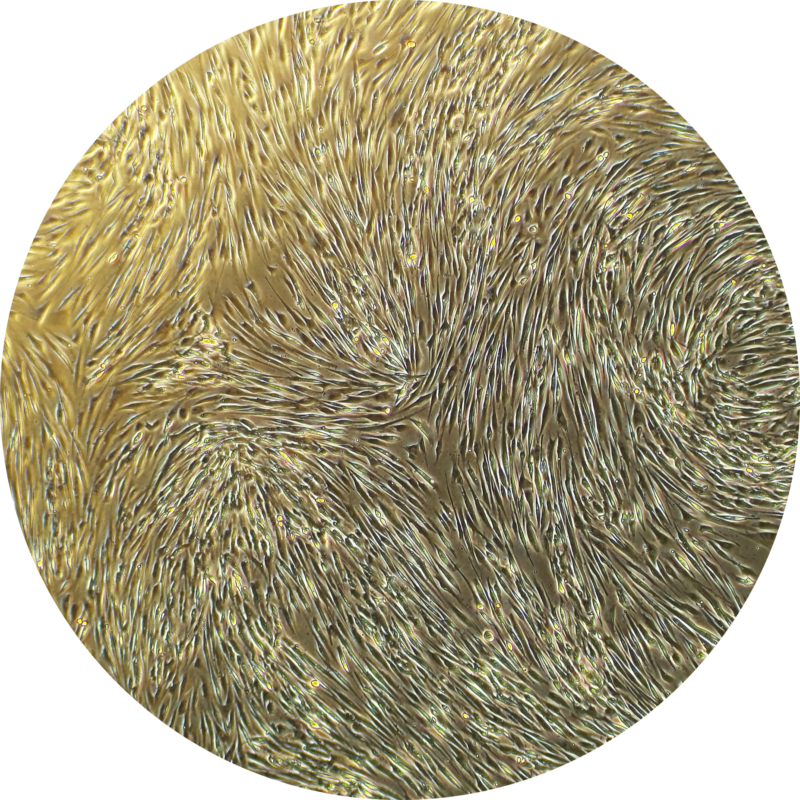
Human iPSC-derived Fibroblasts
Widely used to study ECM remodeling, fibrosis, cell signaling, and wound repair. These fibroblasts show robust secretion of matrix proteins and support for co-culture and 3D tissue systems.
Benefits
- High expression of fibroblast markers (e.g. Vimentin, FSP1, DDR2, PDGFR-α)
- Strong ECM production, contractility in gel contraction assays
- Compatible with co-cultures, organoids, 3D matrices
Product Specifications
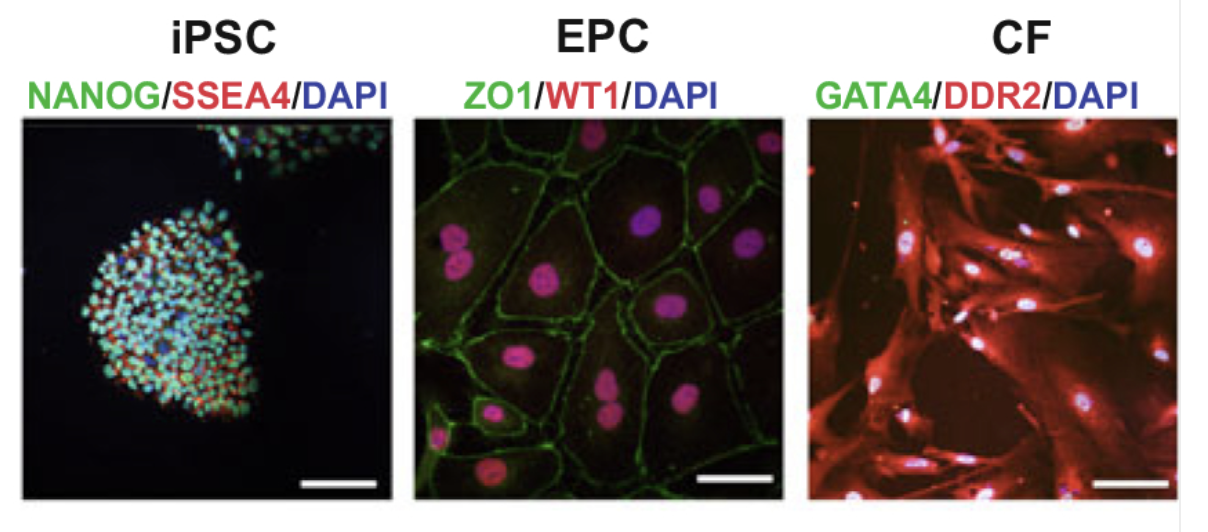
Figure 3. Representative immunofluorescence images showing stage-specific cells express pluripotency genes (iPSC; NANOG and SSEA4), pass through epicardial cell lineage (EPC; ZO1 and WT1) and cardiac fibroblast (CF) genes (GATA4 and DDR2) during the differentiation process. DAPI=nucleus stain. Scale bars, 100µm. From Zhang et al, Methods Mol Biol. 2022;2454:109–115. doi: 10.1007/7651_2020_300
- Identity via marker panels; QC includes viability, mycoplasma, functional assays (e.g. ECM deposition)
- Supplied cryopreserved; sizes scaled to research or higher throughput needs
- Proper donor background info available
Explore Fibroblasts
Access high-quality, iPSC-derived fibroblasts ideal for studies in fibrosis, wound healing, extracellular matrix biology, and drug response screening. Explore product details to see how these cells can enhance the accuracy and consistency of your research.